
Conservation Projects
As a responsible tree care company, we believe in supporting the long-term sustainability of our natural landscapes. That’s why we’re always keen to get involved in conservation projects, to give something back and help to protect natural spaces.
We have been involved in numerous conservation projects, including native hedge and tree planting, woodland restoration, willow spiling, and wildflower meadows.
Below is a portfolio of some of our work.
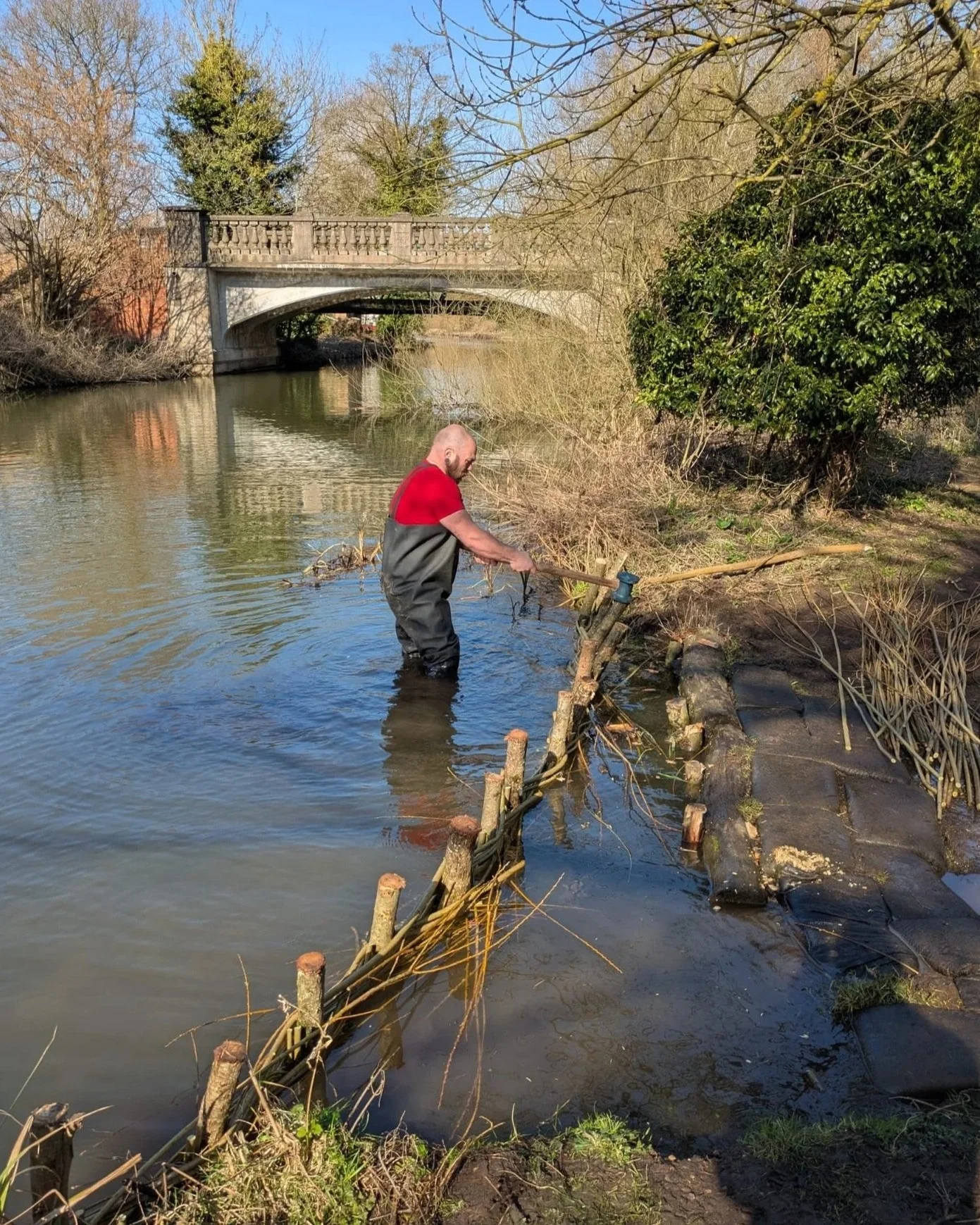
Willow Spiling
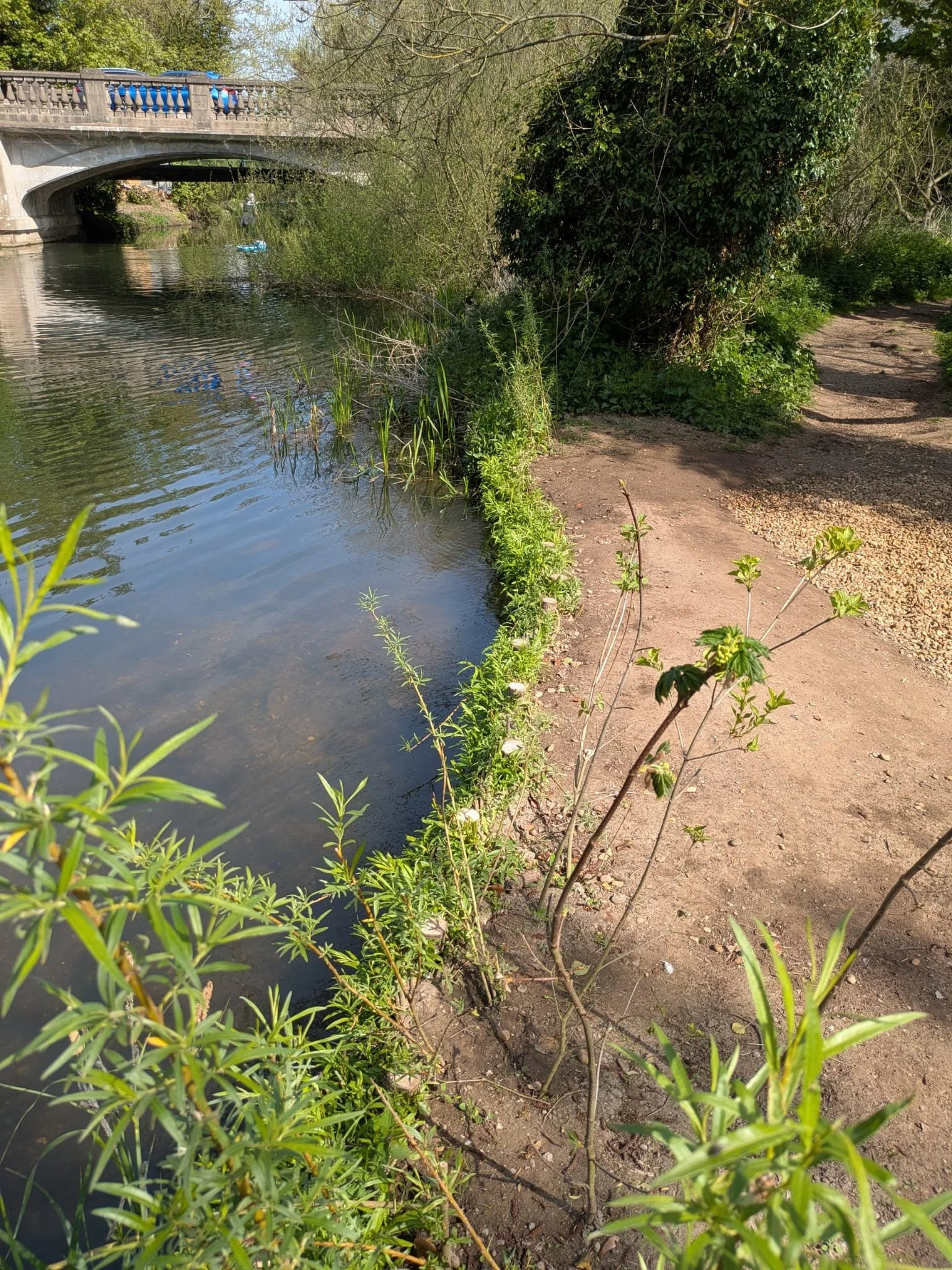
In 2025, a local parish council approached us looking for an eco-friendly solution to ongoing river bank flooding that was affecting a public footpath. Methods, such as piling, are often used in these situations, however, they are costly and rely on felled, and heavily processed timber. As a more sustainable alternative, we recommended willow spiling, a more natural and effective technique that stabilises river banks while enhancing the surrounding ecosystem.
A main focus of conservation efforts involving our rivers in recent years, has been on the rehabilitation of water voles. These crucial ‘eco-system engineers’ are vital in bringing biodiversity back to our rivers. Willow spiling creates a habitat for them to live.
With river levels rising year on year due to record annual rainfall, and concern for biodiversity increasing, we believe willow spiling is an essential and necessary practice which should be adopted widely.
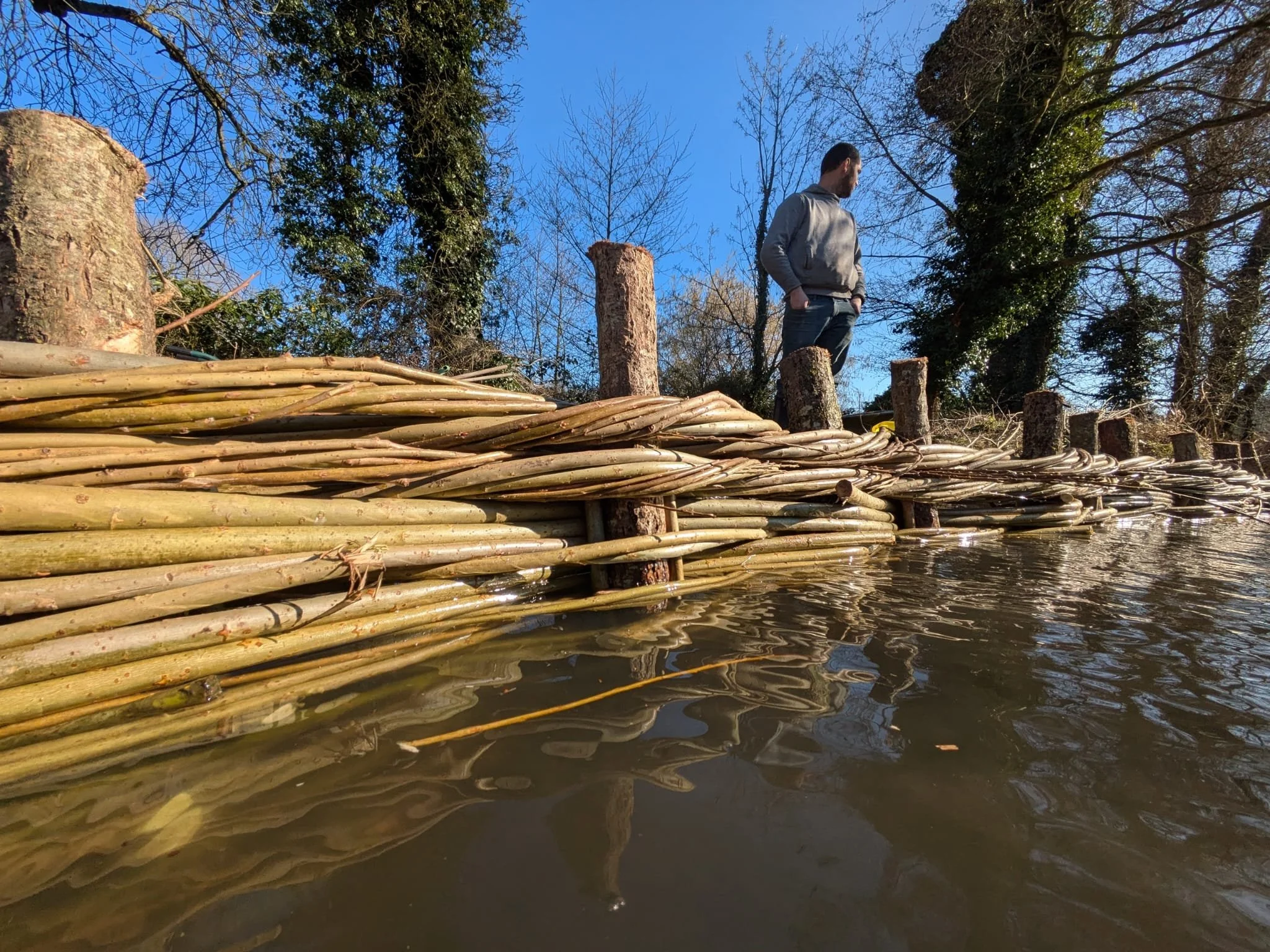
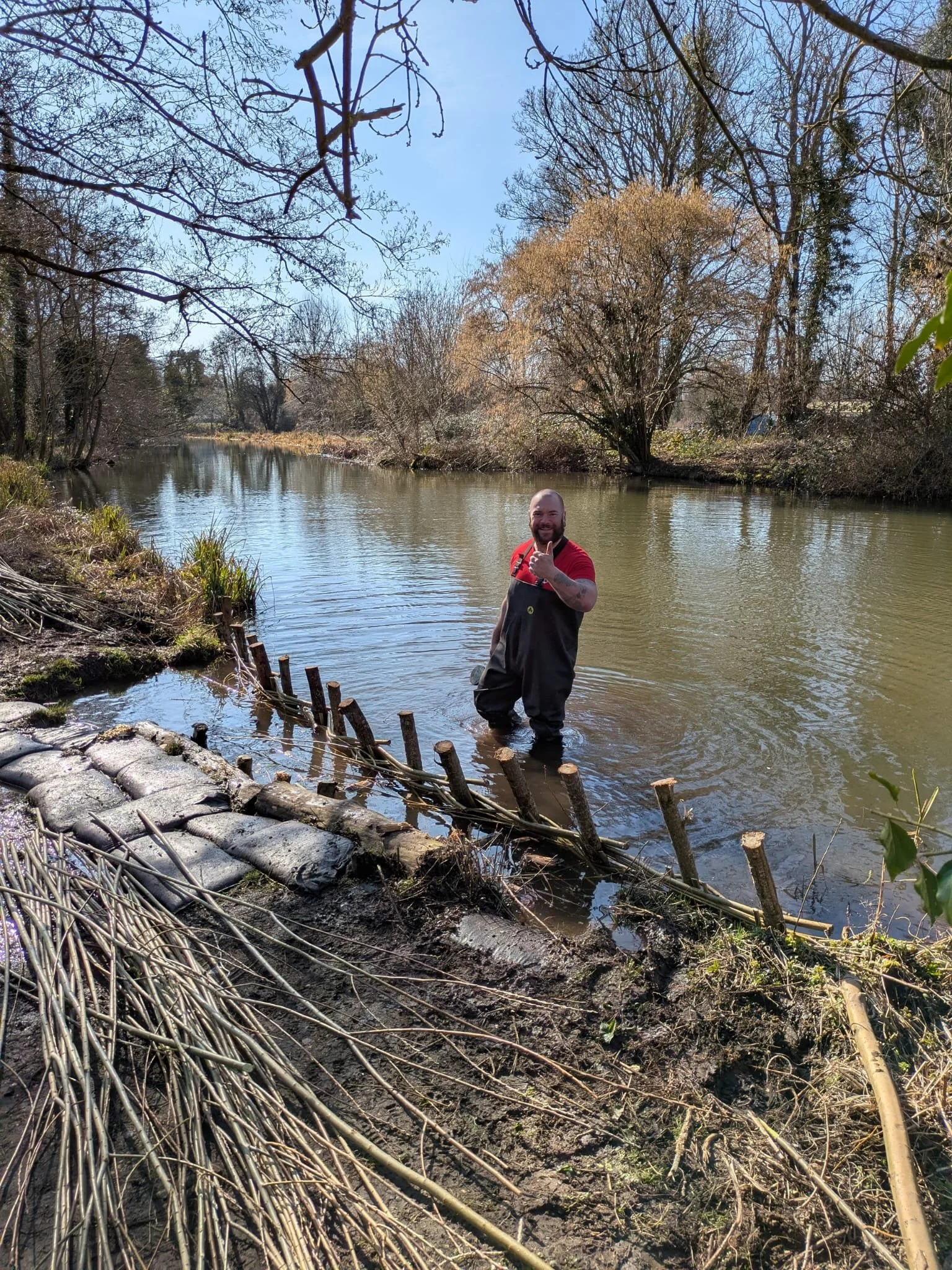
Willow spiling uses live willow whips that are freshly cut, just hours before and posts which are knocked in to the river bed. The willow is weaved around the posts with the ‘butts’ facing inwards, this ensures that when soil is back-filled, the willow can produce roots. Over time, these roots will bind the weave into the bank, forming a natural defence against soil erosion. As well as strengthening the natural defence, the live willow acts as a habitat for native wildlife, such as the endangered water vole.
In this project, the live willow was sourced from the Wye Valley. The land was then backfilled up to the willow spiling, in order to raise the level of the footpath.
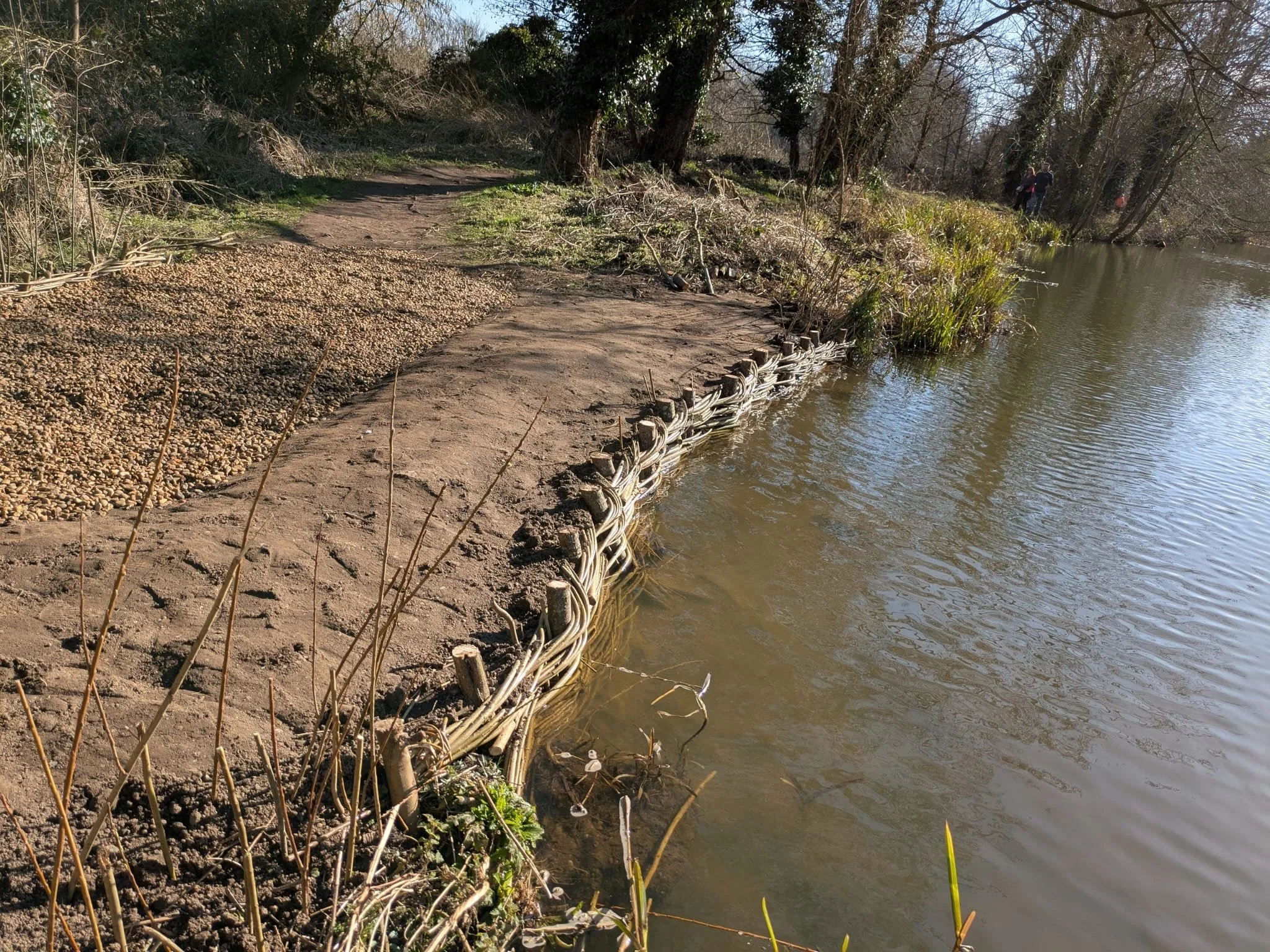
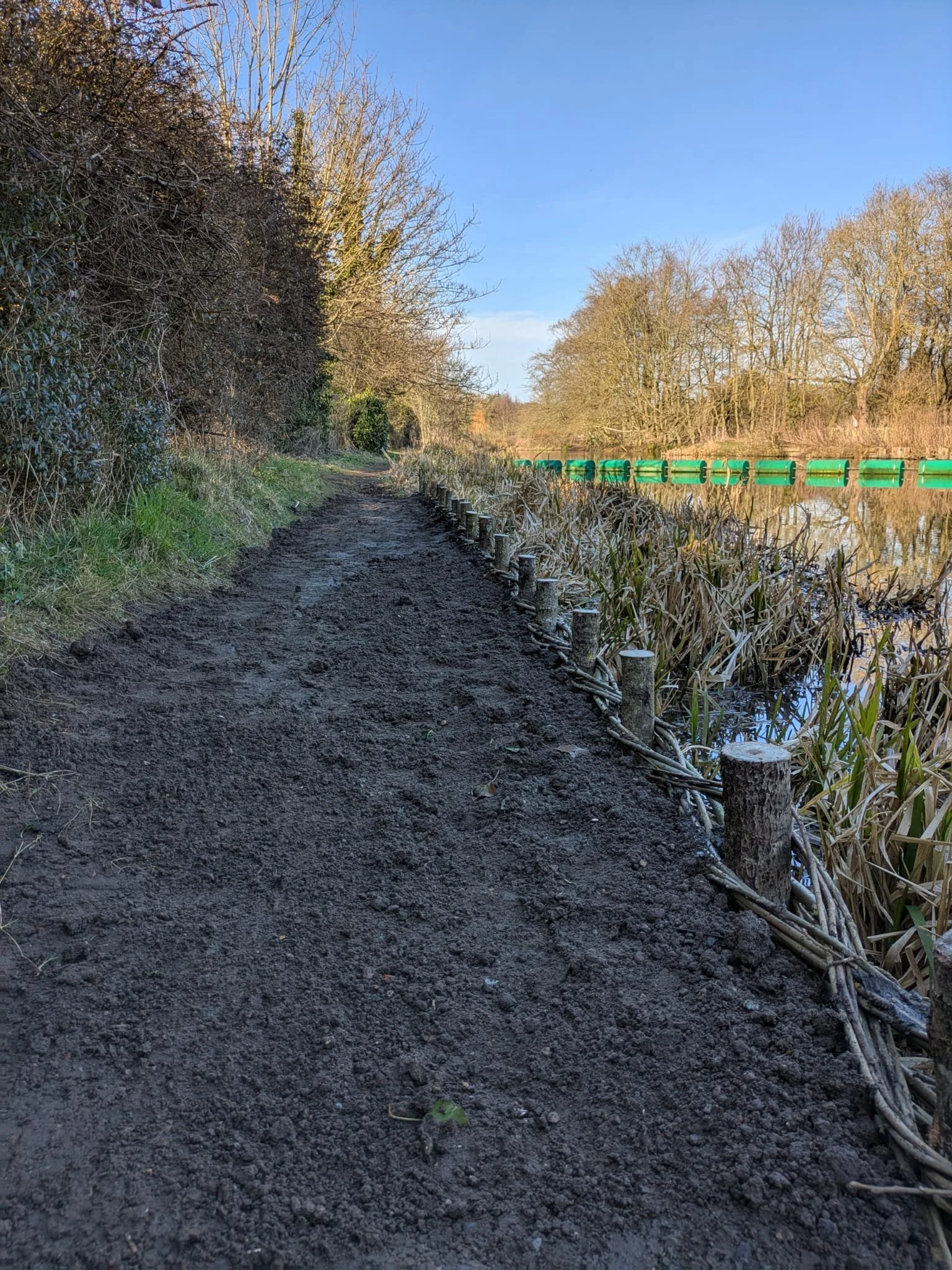
The parish council were extremely happy with our work, and many locals using the footpath have since commented on the beauty of the willow weave. Most people are not used to the traditional practice of willow spiling; we believe that it is only a matter of time before more landowners and councils recognise the versatility of this sustainable building practice.
Tree Planting & Woodland Restoration
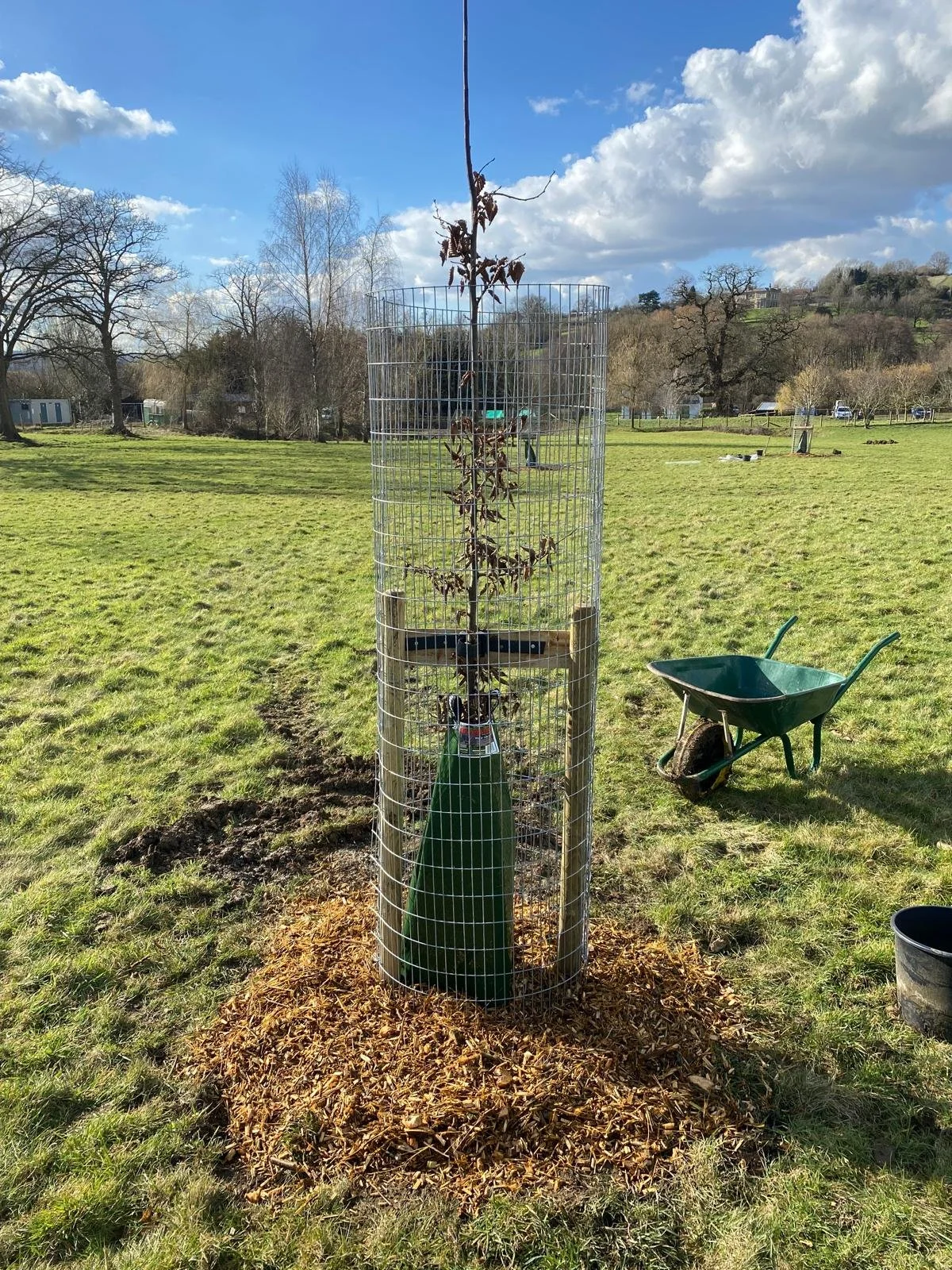
Over the years we have worked with numerous private farms and landowners and have helped to restore many native woodlands, which have been left neglected for years. It’s not that woodlands do not have the ability to sustain themselves - usually they do, but the threat of different tree diseases and the spread of invasive species means some of our woodlands are left devastated. The increase in numbers of grey squirrels, deer and rabbits, with no predators to keep them in check, have stunted the ability of our woodlands to regenerate through browsing.
Although native woodlands are up against it these days, by using different managing techniques we can restore them to their former glory. Removing non-native and invasive species such as Rhododendron and Snowberry is always the best place to start. Getting more light through the canopy to encourage ground cover is also important, as this helps creates protection for young native trees to establish, and also acts as a natural barrier for browsing fauna.
Contact us today so that we can begin a comprehensive Woodland Restoration Plan, to get your woodland back on track.
Get in Touch
If you would like to discuss a conservation project, we would love to hear from you. We are keen to get involved with as many conservation projects as possible throughout Bristol, Somerset, and surrounding areas.
You can reach us on:
thackerstrees@outlook.com
07568 681786
Or alternatively, please use the form provided.